African Pottery Lineart: A Design Review for Business Merchandise
From my perspective as an embroidery designer, the first encounter with the African Pottery Lineart file is distinct. The name itself evokes a specific aesthetic: handmade, rustic, and culturally inspired. This isn't a generic logo; it's a piece of art. For a small business, that initial impression is crucial. It communicates a brand that values craftsmanship, authenticity, and a connection to earthy, organic aesthetics. Whether your business is a café, boutique, creative studio, or handmade product line, this design feels premium and artistic, leaning more towards elegant and classic than purely playful or modern.
The Visual Personality for Brand Identity
When I assess a machine embroidery design for commercial use, I think about how it wears its personality on a sleeve or a bag. African Pottery Lineart carries a quiet confidence. The lineart style suggests clarity and precision, which translates well into professional brand identity. For a business, this means the design can bolster customer trust and recognition. It doesn't shout; it presents. On a staff apron for a bakery or on the chest of a florist's uniform, it feels like a mark of quality—a signal that your business cares about the details. This visual consistency across your merchandise, from product labels to tote bags, creates a cohesive handmade presentation that can enhance perceived product value and deepen buyer engagement.
Real-World Performance on Business Merchandise
Let’s translate that personality into stitches on real items. This is where the practical value of African Pottery Lineart as a digital embroidery file shines for merch creators and apparel decorators.
Embroidered Patches and Product Accents
For creating custom embroidered patches, this design is a strong candidate. The lineart likely offers clean outlines, making it ideal for a standalone patch that can be applied to denim jackets, backpacks, or as an accent on product packaging for a boutique. As a branded patch, it serves as a beautiful add-on for customer gifts or event merch. Its artistic nature makes it perfect for Etsy sellers or craft businesses looking to elevate their brand assets on finished products.
Uniforms, Aprons, and Workwear
On staff uniforms, aprons, or work shirts, African Pottery Lineart acts as a sophisticated sleeve detail or chest logo accent. It’s decorative but not distracting; it adds branding without overwhelming the garment. For a pet brand or local shop, this subtlety is key—the brand mark is present and professional without feeling like a corporate uniform.
Cap Embroidery and Tote Bag Marks
Cap embroidery presents a specific challenge with curved surfaces. The design's success here will depend on its density and scaling. Similarly, as a tote bag design, its lineart style should create a crisp, durable mark that withstands use, adding significant value to boutique merchandise or promotional items.
Considerations for Careful Application
Every design has its optimal applications and its limits. For business use, knowing these ensures a flawless finished product.
With African Pottery Lineart, pay close attention to small patch sizes. If you plan to use it on a tiny product label or a small cap front, you must test the embroidery file at that reduced scale first. Detailed outlines in lineart can become muddy or lose definition if the stitch density is too high for a small area. Always test it on real fabric—a sample of your actual garment or bag material—before full production.
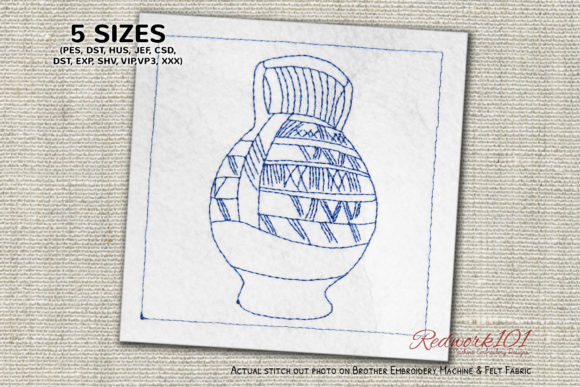
Consider the fabric texture and color. On dark uniforms or textured fabrics like canvas totes, thread color contrast is paramount. The description notes that "The Box Stitch shown in picture is optional," which is a valuable designer note. It means you have flexibility. The color of the outer box can be skipped or adapted, allowing you to match your brand colors or simplify the design for better performance on challenging surfaces. This adaptability is a major asset.
Items that need frequent washing, like aprons or work shirts, require a robust embroidery application. Ensure you use the proper stabilizer and that the design's stitch structure is secure to maintain its integrity through many laundry cycles.
Practical Designer Notes Before You Hoop
Before running this for any commercial embroidery project, follow these steps. They save time, money, and client relationships.
- Test in Black and White First: Run a simple monochrome version. This reveals the fundamental structure and any potential issues with spacing or density without the complexity of color.
- Check Thread Color Contrast: Based on your target fabric, plan your palette. The ability to skip the outer box color gives you control over this.
- Confirm Hoop Size and Create a Mockup: Match the design size to a practical hoop size for your production. Then, create a printable mockup for client approval. Seeing it on a digital image of a cap or apron is invaluable.
- Compare Beside Other Assets: Place the embroidered sample beside your other brand elements. Does it fit visually? Does it enhance your brand identity?
- Review Commercial Licensing: The product description does not specify license terms. It is critical to confirm the commercial licensing of this digital embroidery file before using it on business merchandise for sale.
Final Assessment for Your Small Business
African Pottery Lineart is more than a decoration. It’s a brand-building tool. Its earthy, artistic elegance can elevate your small business merch from simple custom apparel to meaningful branded artifacts. For the embroidery shop or product designer implementing it, its flexible structure—particularly regarding the optional box stitch—offers practical advantages for adapting to different applications like apron embroidery or tote bag design.
My recommendation is to embrace its handmade aesthetic but approach it with a technician’s eye. Test thoroughly, especially at small scales. Use it where it aligns with your brand’s story—on merchandise that speaks to quality, creativity, and authenticity. When executed well, this embroidery file can become a silent ambassador for your business, stitching your identity onto every cap, uniform, and bag you produce.