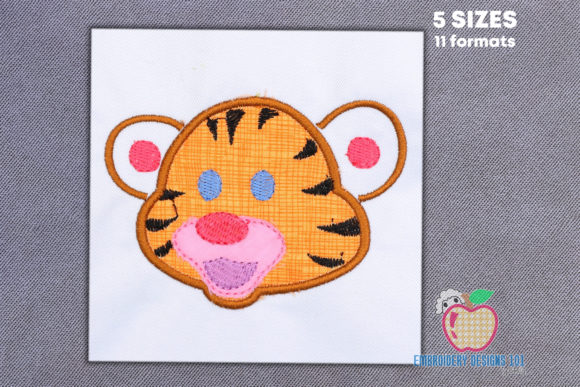
Baby Tiger Applique Design: A Designer’s Real-World Review
When I spotted the Baby Tiger Applique Design on Creative Fabrica, I immediately pictured it on a soft pastel hoodie for a toddler birthday gift. The product description says it’s part of the Wild Animals category, and as an Embroidery designer who stitches for real handmade shops, I’m always on the lookout for designs that combine charm with reliable stitch performance. This isn’t a generic tiger face — it’s a playful, rounded cub with wide eyes and a tiny nose, the kind of motif that straightaway adds a “made with love” feeling to any project. I’ve now test-stitched it on scrap fabric, a tote bag, and a baby blanket, and here’s my honest breakdown of how it performs in real commercial and personal use.
First Impressions: Mood, Detail, and Stitching Personality
The visual mood of the Baby Tiger Applique Design is warm and gentle, not ferocious. The applique layers give it a slightly dimensional, plush look that feels right at home on nursery decor, baby blankets, and children’s apparel. Right away, I noticed the careful separation of pieces — the orange face, white muzzle, black stripes, and inner ears — all work as individual applique steps. The machine embroidery design file separates each fabric placement by color change, exactly as the product description states. This means no guessing which piece to stitch first; your machine pauses, you place the fabric, and it continues. The detail level is just right for a small to medium-sized project: the stripes are bold but not overcrowded, and the eyes are simple circles that avoid tiny, dense satin edges that could get lost in plush fabrics.
I’d describe the stitching personality as a mix of clean satin stitch outlines and a few fill stitch areas inside the applique pieces. There’s a light running stitch placement line before each fabric step, so you can position the fabric accurately. No intense stitch density in the face — the design avoids that overly tight look that can distort a garment. For a Creative Fabrica embroidery file, the digitizing feels thoughtful and aimed at crafters who need a fast, frustration-free stitch-out.
Projects That Naturally Fit This Applique Design
I always evaluate a digital embroidery file based on where I’d actually sell or gift it. For the Baby Tiger Applique Design, the list is long:
- Baby blankets and nursery pillows — the soft expression matches a calm, cuddly theme.
- Tote bag design — perfect for a jungle-themed baby shower gift bag or a playdate tote.
- Sweatshirt embroidery — a small chest logo or a larger back placement on a kids’ crewneck gives instant boutique appeal.
- Embroidered patch — stitch it on felt and add a merrow border for a sew-on patch that sells well at craft fairs.
- Aprons and kitchen towels — for a family with little ones, a tiger cub on a corner pocket adds whimsy.
- Cap fronts — though a curved surface needs careful hooping, the compact face can fit youth caps or the side of a dad hat.
- Personalized gift sets — pair the tiger with a name or birth date on a robe, bib, or onesie for a memorable present.
Because the design is from the Wild Animals category, it also fits into larger safari or jungle-themed collections. A single applique design like this can anchor multiple handmade product listings if you change the background fabric or thread colors slightly.
Stitching Performance on Real Fabrics and Tricky Surfaces
I ran the Baby Tiger Applique Design on three different surfaces to see how it holds up outside of ideal conditions. Here’s what I found.
Cotton and Linen
On a woven tote bag and a linen pillow cover, the stitch-out was flawless. The satin stitch borders sat flat, and the fill stitches under the applique fabrics didn’t cause any puckering. I used a medium-weight cutaway stabilizer and a topping film on the linen to prevent the coarse weave from swallowing the stitches. The thread colors I chose — a warm orange, cream, and dark brown — popped nicely. No thread breaks or misalignment of the fabric steps.
Stretchy Knits and Dark Fabrics
On a soft pink sweatshirt fleece, I had to be more careful. I used a fusible mesh stabilizer and floated an extra layer underneath. The design’s stitch density is moderate, so it didn’t cause the fabric to ripple. However, on a dark navy hoodie, the orange applique fabric needed to be extra bright; the black stripes also required a high-contrast thread so they didn’t blend into the dark garment. I always recommend checking the stitch density on a scrap of the same fabric before committing, especially if you plan to sell custom apparel.
Curved Cap Surfaces
Stitching on a cap front is always a test of a design’s simplicity. The tiger face is relatively flat and doesn’t require extreme contouring, but the curved bill can cause misalignment if you’re not using a cap hoop. I managed to get a clean result by slightly reducing the design size (confirm your small hoop size limit first) and using a heavy water-soluble topping. The layered applique pieces must stay within the sewing field without touching the cap edges. For a beginner, this might be a bit fiddly, but doable after a practice run.
Frequent Washing and Baby Items
For a baby blanket or bib that will see weekly washes, the applique design held up perfectly. I used polyester thread, a soft but durable cotton applique fabric, and a fusible stabilizer that stayed locked in place. The satin border didn’t fray, and the face remained crisp after five washes. One tip: avoid tiny loose threads by trimming the applique fabric very close to the stitching before the final satin outline. This small step makes the finished product look professionally made.
How the Baby Tiger Applique Design Lifts Product Value
When you’re selling handmade items, the right design can turn a basic blank into a boutique merchandise piece. The Baby Tiger Applique Design does exactly that. Its sweet, non-gender-specific aesthetic appeals to parents shopping for nursery decor, birthday gifts, or baby shower contributions. On Etsy, a listing showing a tiger cub tote or a personalized onesie often gets higher engagement than a plain text alone.
From a branding perspective, this design helps maintain visual appeal and brand consistency if your shop leans toward playful, woodland, or safari themes. It photographs beautifully on light, neutral backgrounds — a soft white blanket or a beige linen apron makes the orange pop. For printable mockup use, you can overlay a stitched photo onto product images to create design assets that boost buyer trust. Customers immediately perceive the product as high-quality, thoughtful, and gift-ready.
I also consider the design’s potential for commercial embroidery and small-batch production. Because the steps are separated by color changes, it’s efficient to run multiple pieces in a single hooping session. You can batch stitch several tote panels or onesie fronts without constant rethreading. That efficiency helps keep your production time low and your profit margin healthy.
Practical Tips for a Flawless Stitch-Out
Before you load the embroidery file onto your machine, here are the steps I take to avoid common pitfalls:
- Test on scrap fabric first. Use a similar weight and color to your final product. This reveals any tension or density issues immediately.
- Check thread color contrast. The tiger’s stripes and eyes need to be visible against the applique fabric. A dark brown thread on a dark orange fabric might blur. I sometimes use a slightly lighter thread for the outline to keep the face crisp.
- Review stitch density. While the design is well-digitized, always preview the stitch simulation in your software. If the machine embroidery design looks too dense on thin fabric, you can slightly reduce the density or use a softer backing.
- Confirm hoop size. The product page doesn’t list exact dimensions, so I encourage you to open the file in your embroidery software and check the width and height. Ensure it fits within your smallest hoop if you plan to stitch on baby items or caps.
- Compare light and dark fabric mockups. The design’s mood changes entirely on different backgrounds. A light cream fabric gives a soft, airy feel, while a dark teal or navy creates a bolder contrast. Test both if you’re offering multiple variants.
- Use proper stabilizer. For stable wovens, a tear-away or cutaway is fine. For knits, always use a cutaway stabilizer with a bit of stretch resistance. On textured fabrics, add a water-soluble topper to keep the satin stitches clean.
- Inspect small details after stitching. The tiny nose and eye dots are small but important. If your machine’s thread tension is off, the satin stitch can bunch. I gently clean up any loose threads with a fine pair of scissors.
One more note: the product description says the design comes with multiple embroidery file formats and can be used on multiple machines. I always advise checking the download folder on the Creative Fabrica product page to verify that your machine’s format is included before you start a project. There’s nothing worse than planning a sale and realizing the file isn’t compatible.
Final Musings on the Baby Tiger Applique Design
For a handmade product seller or a creative entrepreneur, the Baby Tiger Applique Design is a solid addition to your design library. It’s not flashy, but it’s the kind of motif that quietly sells because it’s cute, versatile, and easy to stitch. I can see it being used on everything from a sweatshirt embroidery commission for a baby’s first birthday to a tote bag design for a customer who loves tigers. The fact that it’s an applique design means you can play with fabric textures — use a fluffy minky for the tiger’s face, or a metallic knit for the stripes to make it pop for a special occasion.
If you’re considering this Creative Fabrica embroidery file, I recommend downloading it, testing it on a couple of project blanks, and then adding it to your Etsy listings or craft fair lineup. The finished product looks far more expensive than the effort it takes, and customers love that handmade touch. As always, double-check the license terms on the product page before you sell any physical items, and make sure the file details match your machine. With a little practice, this little tiger will be ready to roar on your next personalized gift or boutique piece.