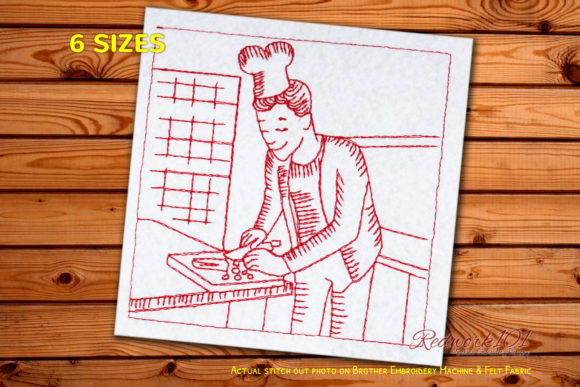
Chef Cooking and Cutting Vegetable Embroidery Design Review
There is a certain warmth that comes through when a design feels like it was made for a real working kitchen, a bustling café, or a small handmade food brand. Chef Cooking and Cutting Vegetable lands in that exact space. The first time I loaded this design into my embroidery software, I could immediately picture it stitched onto a flour-dusted apron, a canvas tote bag filled with fresh produce, or a cap worn by a line cook halfway through a busy Saturday shift. The composition is approachable, friendly, and quietly confident. It does not try too hard to be trendy, and that is precisely what makes it feel durable, like a design that can grow with a brand rather than outlive its welcome after a single season.
The optional box stitch mentioned in the product description is a detail worth noting early. Having the ability to skip the outer box gives this design genuine flexibility. With the box, it reads as a structured patch, something that feels intentional and contained, perfect for a chest accent on a work shirt or a branded label on a product package. Without the box, the design opens up into a more organic shape that can sit naturally on textured fabric, curved surfaces, or layered compositions. The fact that the outer box color can differ from the main design in most cases is another thoughtful touch. It means you are not locked into a single colorway, and you can adapt the frame to match a brand palette without forcing the entire design into a color scheme that does not work.
First Impressions and Visual Personality
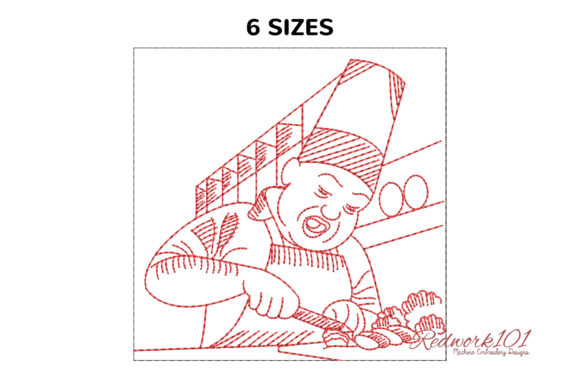
This is not a hyper-realistic culinary illustration. The lines suggest a hand-drawn, slightly rustic, almost storybook quality that feels genuinely warm. Chef Cooking and Cutting Vegetable carries a personality that sits somewhere between a classic bistro chalkboard sketch and a modern artisan food label. The chef figure is active, engaged in the task of cutting vegetables, which immediately communicates movement, craftsmanship, and care. For a small business, this matters. A static or overly polished design can feel sterile, but a design that shows action, hands at work, ingredients being prepared, connects with customers on a different level. It says handmade, fresh, real.
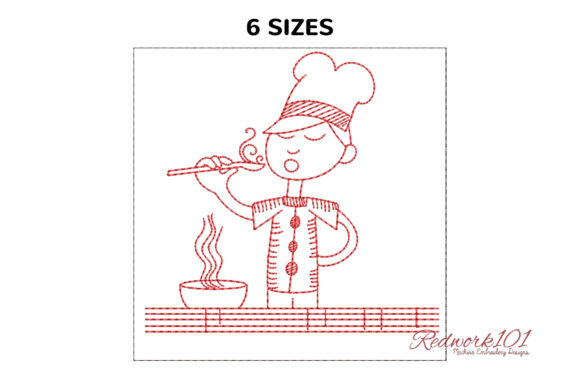
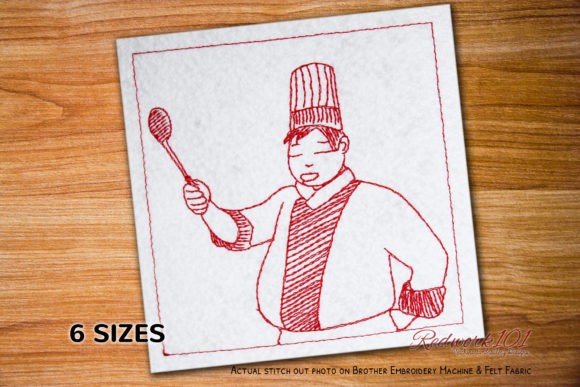
From a branding perspective, the visual tone is versatile. A farm-to-table café could use this design to reinforce their commitment to fresh ingredients. A bakery that also sells savory items could use it to bridge the gap between sweet and savory branding. A florist who also runs a small kitchen goods line could place this design on a tote bag and suddenly have a cohesive product extension. Even a pet brand that makes fresh dog food or treats could adapt this design into their merchandise line. The chef motif is broad enough to serve many niches while still feeling specific enough to not look generic.
How Chef Cooking and Cutting Vegetable Performs in Real Business Use
When I evaluate any machine embroidery design for commercial use, I ask one question first: can this design hold its own on a finished product that a customer pays actual money for? With Chef Cooking and Cutting Vegetable, the answer is yes, provided you respect the design's natural scale and stitch characteristics.
Embroidered Patches
This design is a natural fit for embroidered patch production. The optional box stitch creates a clean border that makes patch finishing straightforward. A patch version of this design could be sold as a standalone product, included as a free gift with purchase, or sewn onto aprons, jackets, and bags. The hand-drawn quality translates beautifully into a patch format, where slight texture and stitch variation add character rather than looking like a flaw.
Apron Embroidery
Apron embroidery is where this design truly shines. A chest placement on a bib apron, centered and stitched with care, instantly elevates a plain apron into a branded uniform piece. For a small café or catering business, matching aprons with this design create visual consistency across staff. The motion in the chef figure reads clearly even from a distance, which is important in a busy service environment where customers catch only a quick glance.
Cap Embroidery
Cap embroidery requires careful consideration. The front panel of a structured cap is a curved surface with limited flat area. This design, depending on its digitized size, may need to be tested at a reduced scale for cap use. If the stitch count is dense and the details are tight, shrinking it too much could cause thread buildup, puckering, or loss of clarity. I would recommend stitching a test sample on a cap before committing to a full production run. That said, if the design scales down cleanly, it would make a fantastic cap accent for a food truck, a coffee shop, or a culinary school.
Tote Bag Design
A tote bag design gives you more room to work with, and this design can stretch to fill a larger placement area without losing impact. On a natural canvas tote, the chef illustration feels like a quiet statement of quality. I have seen similar designs used by artisan bread makers, organic produce markets, and specialty kitchen stores. The design works especially well when the thread colors are chosen to complement the fabric rather than contrast too sharply. A muted olive, warm terracotta, or deep navy thread on natural canvas creates a look that feels premium and intentional.
Staff Uniforms and Work Shirts
For staff uniforms, consistency is everything. Chef Cooking and Cutting Vegetable placed on a left chest or sleeve adds a professional touch without overwhelming the garment. The design communicates that the business cares about details, from the food they serve to the way their team presents themselves. On a dark polo shirt or a classic button-down, the design must be tested for contrast. Light thread on dark fabric can look striking, but if the design has fine details, thread bleeding on dark backgrounds can blur edges. Test in black and white first is a rule I never skip for any digital embroidery file destined for uniforms.
Boutique Merchandise and Customer Gifts
Small businesses often underestimate the power of branded merchandise. A customer who receives a beautifully embroidered item, even a small one, keeps that brand in their life. This design could work on a simple kitchen towel, a zip pouch, a reusable produce bag, or a canvas apron sold as part of a gift set. For Etsy sellers and handmade brands, adding an embroidered product to a shop lineup creates a higher perceived value and opens up a new revenue stream that complements digital or physical goods.
Where to Use This Design Carefully
Not every placement is forgiving, and honest design reviews must address the limitations. Chef Cooking and Cutting Vegetable has a level of detail that requires attention to scale and fabric choice.
- Small patch sizes: If the design is digitized with fine details, reducing it below a certain threshold will cause those details to close up. Thread can fill small gaps, and the chef's hands, knife, and vegetable shapes may become indistinct. Always test at the smallest intended size.
- Cap fronts: The curved surface and limited height on a cap front panel can distort the design if not properly digitized for caps. The box stitch, if included, may need to be removed or adjusted for cap placement.
- Tiny lettering: If the design includes any text elements, small lettering is the first thing to fail in embroidery. Check for minimum letter height and ensure the stitch type supports clean, legible text.
- High stitch density areas: Dense sections can feel stiff on lightweight fabrics and may cause puckering on stretchy materials. Use the right stabilizer and test on the actual fabric you plan to use.
- Textured fabrics: Terry cloth, thick fleece, and loosely woven fabrics can swallow details. A design with fine lines needs a smooth, stable surface to read clearly.
- Dark uniforms: Dark fabric absorbs visual contrast. You may need to adjust thread colors or slightly thicken outlines to maintain clarity on black or navy garments.
- Frequent washing: For items that will be washed often, choose high-quality thread and ensure proper stitch density. Loose or overly dense stitching can degrade faster with repeated laundering.
How This Design Affects Brand Identity and Customer Trust
Brand identity is built in the details. A business that uses Chef Cooking and Cutting Vegetable on their merchandise is making a subtle but powerful statement. The design says that the brand values craftsmanship, that there is a human hand behind the product, and that quality is not just a buzzword. In a marketplace saturated with cheaply printed logos and generic clip art, a well-executed embroidery file on a physical product stands out.
Customer trust grows when a brand's visual presentation matches the quality of their product or service. A bakery that sells beautifully crafted pastries but uses a poorly stitched logo on their staff shirts creates a disconnect. The same bakery, with this design professionally embroidered on a clean apron, reinforces the message that every detail matters. Recognition follows naturally. When customers see that chef figure on a tote bag at a farmers market or on a cap at a coffee shop, they begin to associate the image with the brand experience.
Product value also increases. An embroidered item feels more substantial than a printed one. The texture, the weight of the thread, the way light catches the stitches, all of these contribute to a perception of quality that justifies a higher price point. For handmade businesses, this is especially important. A handmade product paired with a handmade-feeling embroidery design creates a cohesive story that resonates with buyers looking for authenticity.
Practical Embroidery Designer Notes
Before sending this design to production, I run through a checklist that has saved me from costly mistakes more times than I can count. If you are an embroidery shop, an apparel decorator, or a small business owner preparing to use Chef Cooking and Cutting Vegetable, these steps are non-negotiable.
- Test in black and white first. Remove color from the equation and check if the design still reads clearly. If the composition falls apart without color, it will struggle on certain fabric and thread combinations.
- Check small patch size performance. Stitch a sample at the smallest size you intend to use. Look for thread buildup, lost details, and overall legibility.
- Review thread color contrast. The difference between adjacent thread colors must be enough to create definition. If two colors are too close in value, they will blend together and lose the shape.
- Inspect spacing carefully. Open areas between design elements need enough room to breathe. Tight spacing can cause thread to overlap and create a messy finish.
- Confirm hoop size. Know the exact dimensions of the design and match it to a hoop that provides adequate clearance. A design that is too close to the hoop edge is harder to stitch cleanly.
- Test on real fabric. Do not rely on how the design looks on screen. The same embroidery file can look completely different on cotton, denim, canvas, and polyester. Test on the actual material your finished product will use.
- Use proper stabilizer. The right stabilizer prevents shifting, puckering, and distortion. Lightweight fabrics need different support than heavy fabrics, and stretchy materials require stabilizers that accommodate movement.
- Create a mockup for client approval. A printable mockup or a digital preview helps clients visualize the finished product. It also protects you by setting clear expectations before production begins.
- Compare beside other design assets. If this design will sit alongside other logos, patches, or text elements on a garment, check the overall balance. The design should feel like part of a cohesive set rather than an isolated element.
- Confirm commercial licensing. Before using Chef Cooking and Cutting Vegetable for business purposes, verify that the commercial embroidery license covers your intended use. This includes reselling finished products, creating merchandise, and using the design in client work.
Final Thoughts from the Embroidery Desk
I have stitched hundreds of designs over the years, and the ones that earn a permanent place in my library are the ones that work reliably across multiple projects. Chef Cooking and Cutting Vegetable has that quality. The optional box stitch, the adaptable outer color, and the warm, hand-drawn personality make it a strong candidate for any small business merch project that needs a culinary touch. It is not a design that demands attention with flashy detail or oversized proportions. Instead, it earns trust through consistency, clarity, and a genuine sense of character.
For the boutique owner launching a new kitchen line, the Etsy seller building a branded product collection, the café owner outfitting a team, or the creative studio designing custom design assets for a client, this design is worth a close look. Test it properly, choose your thread colors with intention, and let the chef do the talking on the finished product. When a design feels like it belongs exactly where it is stitched, the work is done right.