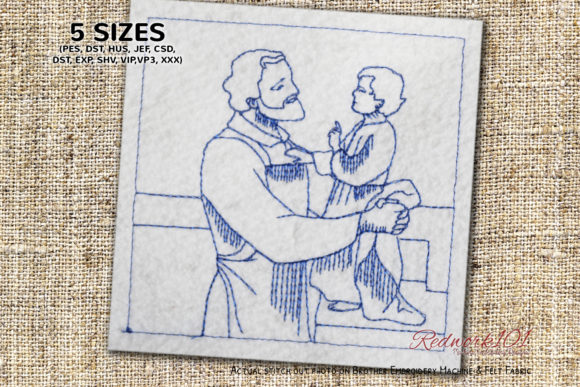
Christmas Nativity Design: A Designer's Practical Review
Whenever I get a new embroidery design, I imagine it already stitched out. I hold it up mentally against different fabrics, in different settings, and picture it on a finished product. This Christmas Nativity Religious Concept design immediately conjured a quiet, reverent mood. It's not flashy or overly festive; it feels classic, focused on the story itself. The layout is central and balanced, with a level of detail that suggests a thoughtful piece, not a quick holiday graphic. It has a visual personality that leans traditional and sincere, which tells me it belongs to projects meant for reflection or meaningful gifting.
The First Project That Came to Mind
I pictured it on a linen pillow cover, destined for a cozy living room during the holidays. But then, my practical brain—the one that runs a small embroidery business—switched gears. I thought of a custom-order scenario: a client wanting a personalized gift for a family member, perhaps a embroidered patch to be sewn onto a special blanket, or the design stitched directly onto a high-quality tote bag meant to be used year after year. This design feels like it would elevate such an item from a simple craft to a cherished heirloom.
Where This Nativity Design Shines in Real Use
The strength of this concept is its thematic clarity. For custom apparel like sweatshirts or t-shirts, it offers a subtle yet unmistakable holiday statement. It would work beautifully on baby clothes or nursery decor as a gentle, spiritual touch. As a focal point on pillow covers, tea towels, or aprons, it creates a product with a calm, handmade presentation that customers often associate with higher value and authenticity. For Etsy sellers and craft fair vendors, this design can anchor a whole category of holiday merchandise, from gifts to boutique home decor. Its classic nature aids in brand consistency for shops focusing on traditional or religious themes.
In terms of visual appeal and stitching clarity, the design’s composition looks promising. The elements seem distinct enough to allow clean satin stitches or fill stitches without too much risk of blending into a muddled mess. This clarity is crucial for customer trust—a crisp, well-defined embroidered product looks professional and increases buyer engagement. It just looks like it was made with care.
Careful Application: Where to Test First
Any design with potentially small details demands a thoughtful approach. I would be cautious using this on very small hoop sizes, where intricate features might become too dense and lose definition. Textured fabrics like thick sweaters or stretchy fabric like some t-shirts could require extra stabilizer and testing to ensure the shapes don’t distort. If stitching on dark fabric, the thread color contrast will be paramount; you’d need a thoughtful palette to keep the image legible.
Curved surfaces like caps can be tricky with centralized designs—the curvature might affect the perspective of the layout. Also, for products destined for frequent washing, like kitchen towels or baby items, you’d want to test the stitch density to ensure it holds up over time without excessive wear. These are not flaws of the design itself, just the practical realities of machine embroidery application.
Turning a Digital File into a Trusted Product
My process with any new embroidery file is methodical. First, I always test the design on scrap fabric that mimics my final product fabric. This reveals everything: how the stitch density feels, whether any tiny details get lost, and how the colors interact with the background. I check thread color contrast by also running a simple test on both light and dark fabric backgrounds. It’s eye-opening.
I review the hoop size requirement and confirm it works for my intended project. For something like this Nativity design, I’d inspect the small details closely in this test stitch-out—any fine lines or lettering need to be crisp. Using proper stabilizer is non-negotiable here to preserve that clarity.
Since I often create printable mockups for my online shop, I would also test the design in black and white mockups to see how it reads as a graphic asset. This helps customers visualize it on different products. Finally, before any commercial use, I confirm the licensing terms. Can I use it for personal and commercial projects? Can I sell the finished items, like embroidered patches or holiday gifts? This step protects my craft business and ensures I’m using the digital embroidery file correctly.
The Final Impression for Your Embroidery Project
The Christmas Nativity Religious Concept strikes me as a versatile, value-adding design. It has the giftability and recognition factor that holiday shoppers look for, but with a depth that avoids being generic. It’s likely to stitch out well and become a handsome finished product. For apparel decorators, small business owners, and creative entrepreneurs, it represents a solid design asset that can serve both personal sentiment and commercial purpose.
Remember, the note about the optional box stitch is a helpful reminder of flexibility. It means you can adapt the design’s border to suit your project’s aesthetic, simplifying it if needed. In practice, this allows you to match the design to more modern or minimalist products if the classic box doesn’t fit your vision.
In the end, my designer’s judgment is this: this nativity design is a practical choice. It carries emotion without being overly sentimental, and its structure suggests it will translate reliably from a digital concept to a tangible, beautiful piece of handmade product. Just give it the practical respect any good embroidery project deserves: test it, prepare your materials thoughtfully, and stitch it with confidence.