Chicken Leg Embroidery Design: A Designer’s Honest Take
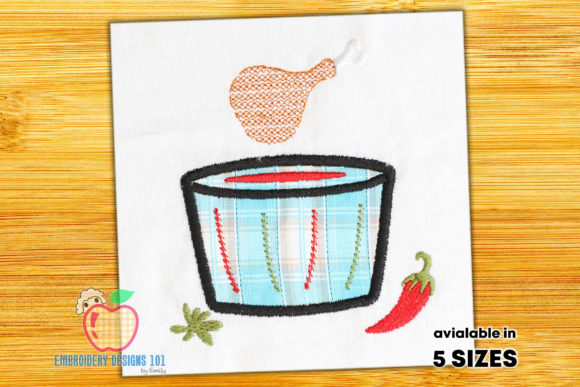
Every so often, a design lands in my stitch library that stops me mid-scroll. The Chicken Leg applique design did exactly that. It’s not a full bird, not a farm scene, just a beautifully rendered, slightly humorous chicken leg with a drumstick and thigh. I’ve seen plenty of poultry-themed machine embroidery files, but this one feels like a clever punctuation mark for a specific kind of project. As a designer who regularly tests embroidery files for client work, craft fair inventory, and small shop merchandise, I’m going to walk you through how Chicken Leg actually holds up under real project conditions, not just on a screen.
First Impressions: A Quirky, Confident Motif
Opening the Chicken Leg file, the mood hit me immediately: playful, a little nostalgic, and surprisingly versatile. The shape reads clearly even at a small size. The drumstick and thigh are separated by a clean satin stitch border, and the applique placement feels intentional. There’s a warmth to the design that makes it work for everything from a farmers market tote to a cheeky kitchen apron. The style is more stylized than photo-realistic, which gives it a handmade, boutique feel. That’s a huge plus for Etsy sellers and craft business owners who want their finished product to look like a thoughtful design choice, not a generic clip-art conversion.
I immediately pictured this on a natural canvas tote bag. A local farm stand vendor asked me to create a few sample items for their weekend market booth, and a Chicken Leg embroidered patch on a heavy-duty tote felt like a perfect fit. It’s the kind of design that makes customers smile, and that emotional hook is gold for personalized gifts and impulse buys at craft fairs.
Breaking Down the Stitch and Applique Construction
Because the product description notes that steps are separated by color changes, I know this design is built for easy thread changes and clean applique execution. In my test stitch-out, the satin stitch border was dense enough to cover the fabric edge nicely without feeling bulletproof. The fill stitch on the drumstick portion had a subtle texture that mimicked the skin, and the running stitch placement marks for the applique fabric were precise. I didn’t need to stop and re-align anything, which is a huge time-saver during production runs.
If you’re a beginner, the color change stops are a godsend. You place the base fabric, let the machine run the placement stitch, trim the fabric, and then the final satin border covers it all. The Chicken Leg applique design is straightforward enough that you won’t be wrestling with tiny, fiddly pieces. The thigh area has a slight curve, but it’s gentle and forgiving even on a 4x4 hoop. I did test it on a 5x7 hoop to give myself more room, and the larger size brought out the details in the bone end and the muscle definition without any distortion.
Choosing the Right Thread and Fabric Combinations
Thread color selection makes or breaks an applique design. For Chicken Leg, I leaned into warm, golden-brown tones for the breading or skin, and a soft cream for the bone. The satin stitch border in a slightly darker shade gave it a crisp, dimensional look. I also tested a more playful version with bright red thread for the border on a white t-shirt, and it popped like a retro diner sign. The design adapts beautifully to different color palettes, which means you can reuse it for holiday embroidery, baby embroidery, or even a custom apparel line without it feeling stale.
Fabric texture is another practical consideration. I stitched Chicken Leg on a mid-weight cotton twill, a fleece sweatshirt, and a simple muslin tea towel. On the twill, the stitches sank in just enough to look integrated, not like a sticker. The fleece required a bit more care: I used a water-soluble topper to keep the stitches from burying themselves in the pile. The design held up well, but I’d caution anyone working on plush fabrics to test first. On the tea towel, the applique felt sturdy and washable, but I’d still recommend a soft cut-away stabilizer behind the entire design to prevent shifting over time, especially if you’re selling finished products.
Where Chicken Leg Absolutely Shines
This design is a natural fit for kitchen textiles, and I don’t just mean tea towels. An apron with a single Chicken Leg on the chest pocket or flanked by two smaller drumsticks on the waistband is a showstopper. For a small shop product, a set of linen napkins with a corner drumstick motif would appeal to the farm-to-table crowd. I also see massive potential for embroidered patch applications. The shape is self-contained, so you can hoop a piece of felt or twill, stitch a few out, and turn them into iron-on patches for jean jackets, caps, or bags. The patch route lets you sell a lower-cost handmade product while still using the same digital embroidery file, and that’s a smart move for an Etsy seller looking to expand their inventory.
Custom apparel is another strong category. I’d put this on a sweatshirt for a chicken wing festival, a baby onesie for a family with a sense of humor (the design looks adorable on a tiny bib, by the way), or a tote bag design for a butcher shop or organic meat CSA. The Chicken Leg motif immediately communicates the theme without being literal or overly complex. Customers recognize it instantly, and that recognition builds trust in your product’s quality and theme.
Real-Life Project Risks and How to Avoid Them
No design is perfect for every surface, and Chicken Leg has a few spots where you need to be intentional. The narrow section where the drumstick meets the bone can create a stitch density pinch if you’re not using a quality stabilizer. On a very thin fabric like a lightweight jersey, the satin stitch might pull the fabric slightly. I’d avoid using this design on a single layer of stretchy knit without a sturdy backing, and definitely not without a test stitch. For caps, the curved surface can distort the shape if you’re not careful with hoop placement. The design’s height works better on the front panel of a cap rather than the side, where the curve is more aggressive.
Dark fabric is your friend for contrast, but watch the thread color for the bone. A pale cream thread on black fabric can look a little harsh if the stitch density is too high, so I reduced the upper thread tension slightly and used a polyester thread for a softer sheen. On patterned fabric, the applique base fabric needs to be solid or the design’s outline gets lost. I tried a subtle gingham print for the chicken skin, and while it looked cute, the bone detail didn’t read as clearly at a distance. Stick to solid fabrics for the applique pieces, or at least a very small-scale print.
Practical Designer Notes Before You Stitch
Before you load the Chicken Leg embroidery file onto your machine, run through these checks. I do this for every design, whether it’s for a one-off personalized gift or a batch of commercial embroidery products.
- Hoop size verification: Since the product description doesn’t list exact dimensions, measure the design in your software. I always overlay a virtual hoop to confirm it fits the size I intend to stitch. The Chicken Leg design I tested scaled well down to about 3.5 inches tall without losing crucial detail, but don’t assume anything without checking.
- Stitch density check: On my first test, I ran a slow stitch-out on scrap fabric to see if the satin stitch felt too tight. The default density was acceptable, but I adjusted the pull compensation slightly on my machine to avoid any fabric puckering.
- Thread color contrast: I always test the design in a black-and-white printable mockup. It’s a quick way to see if the bone and meat portions have enough value separation. The Chicken Leg passed easily, but I still recommend this step for any embroidery project.
- Stabilizer pairing: For most woven fabrics, a medium-weight cut-away stabilizer worked perfectly. For towels, I added a tear-away behind the cut-away and used a topping film. For patches, I went with a heavy tear-away that I could remove cleanly from the back.
- Licensing awareness: The description notes that the design comes with multiple file formats, but it doesn’t explicitly state the commercial license terms. Before you sell finished products or use it as a design asset in a digital embroidery bundle, clarify the license with the seller. This is non-negotiable for any craft business.
The Commercial and Branding Potential
From a small business perspective, the Chicken Leg design is a building block. It’s not a full scene, so you can pair it with text, borders, or other farm-themed elements to create a cohesive brand identity. Imagine a line of kitchen towels with a coordinated set of poultry and produce designs, all using the same color palette and stitch style. That kind of consistency is what makes a handmade product line look professional and giftable.
I also appreciate how the design works for digital product sellers. If you offer printable mockups of embroidered items, a clean, well-digitized chicken leg applique makes a fantastic visual. It’s quirky enough to stand out in a sea of floral and monogram mockups. Similarly, for design assets in a subscription box or a craft business membership, this design adds a playful, food-themed option that many makers overlook.
Final Stitch Thoughts
After stitching out Chicken Leg multiple times, I’m confident it deserves a spot in a working embroidery library. It’s not trying to be a masterpiece of realism; it’s a well-executed, charming applique that fills a specific niche. The stitch quality is solid, the color separation is logical, and the design’s personality translates to a wide range of finished products. Whether you’re making a silly holiday gift for a grill master, building a boutique line of kitchen decor, or just adding some humor to your Etsy shop, this design delivers what it promises. Just take the time to test it on your go-to fabrics, fine-tune your stabilizer routine, and let the Chicken Leg become a conversation piece in your project lineup.
In the world of machine embroidery design, sometimes the most specific, slightly offbeat motifs are the ones that sell best. They attract the customer who’s been looking for exactly that. And a well-stitched chicken leg on a tote bag or apron? That’s a finished product someone will remember.